

UAE Electronic Invoicing (e-Invoicing)
UAE Electronic Invoicing (e-Invoicing)
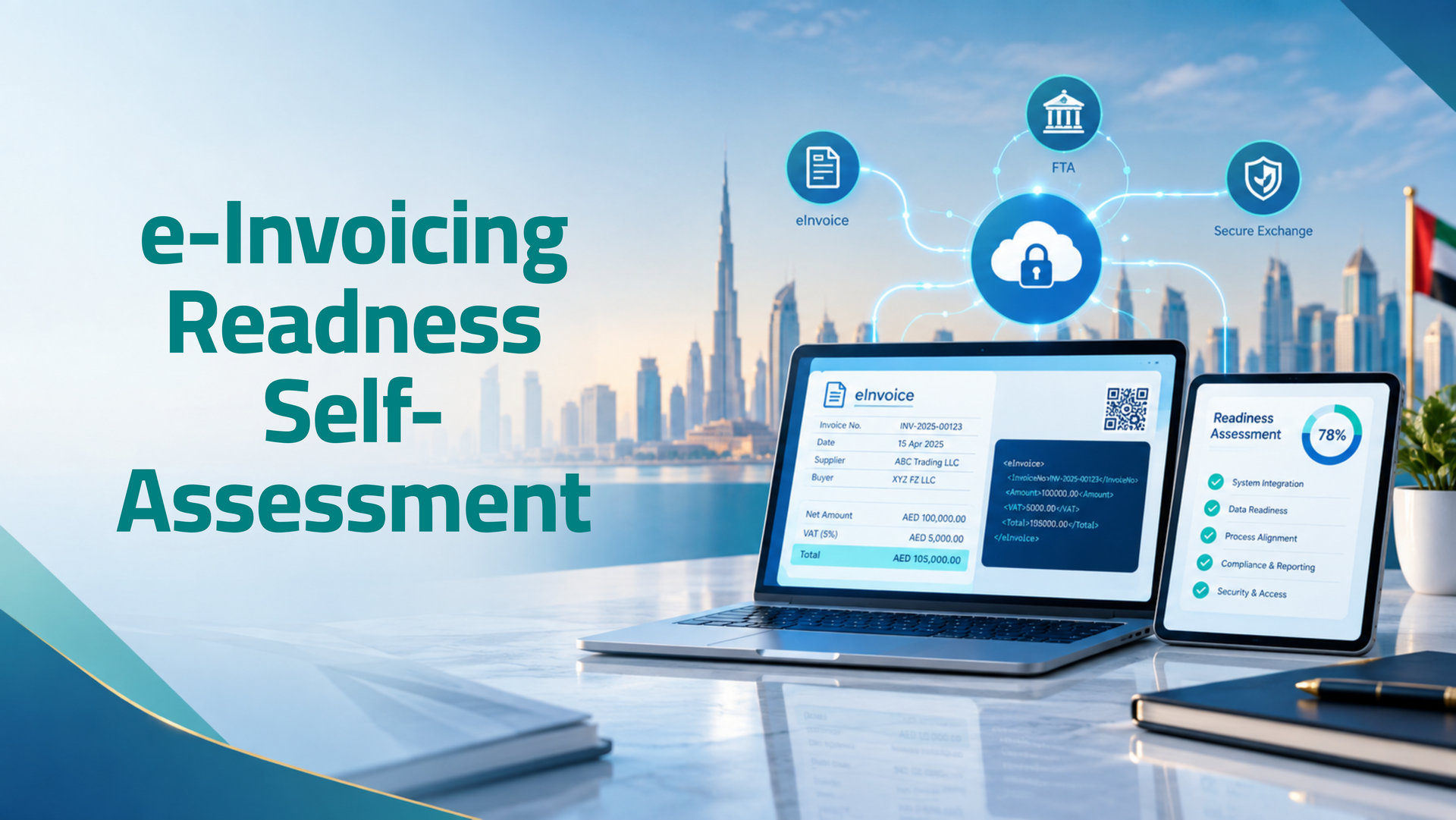
The United Arab Emirates is introducing a national Electronic Invoicing (e-Invoicing) System as a major component of its digital transformation and tax-compliance agenda. The system is designed to replace traditional paper and unstructured electronic invoicing with the structured, automated exchange of invoice data between businesses and the Federal Tax Authority (FTA).
The UAE e-Invoicing framework is principally governed by Ministerial Decision No. 243 of 2025 on the Electronic Invoicing System, Ministerial Decision No. 244 of 2025 on its implementation, together with subsequent amendments and the official UAE Electronic Invoicing Guidelines issued by the Ministry of Finance (MoF).
What is an e-Invoice?
An e-Invoice is structured invoice data that is electronically issued and exchanged between a supplier and buyer and reported electronically to the FTA.
Importantly, simply creating or sending an invoice electronically does not make it an e-Invoice. A PDF, Word document, scanned invoice, image or invoice sent by ordinary email remains an unstructured electronic document and does not satisfy the UAE e-Invoicing definition.
The UAE model is based on the internationally recognised OpenPeppol framework and uses a four-corner model, under which businesses exchange invoice data through accredited service providers rather than transmitting invoices directly to the FTA.
Who is affected?
The system generally applies to Persons carrying on Business in the UAE in respect of transactions within the scope of the legislation.
The principal mandatory scope covers:
- Business-to-Business (B2B) transactions;
- Business-to-Government (B2G) transactions; and
- the associated issuance, receipt, exchange and reporting of electronic invoices and electronic credit notes.
Business-to-Consumer (B2C) transactions are currently outside the mandatory e-Invoicing requirement, and persons exclusively conducting B2C transactions are not currently required to implement the system unless the Minister subsequently determines otherwise.
Certain transactions and activities are also specifically excluded. These include specified sovereign government activities, certain airline transactions and specified VAT-exempt financial services. The official Guidelines should be consulted when determining whether a particular transaction falls within an exclusion.
Implementation timetable
The UAE has adopted a phased implementation approach:
Category ASP Appointment Mandatory
Deadline Implementation
Businesses with annual revenue
AED 50 million or more 30 October 2026 1 January 2027
Businesses with annual revenue
below AED 50 million 31 March 2027 1 July 2027
In-scope Government Entities
31 March 2027 1 October 2027
The original ASP deadline for businesses with revenue of AED 50 million or more was 31 July 2026. Ministerial Decision No. 66 of 2026 extended this deadline to 30 October 2026, while leaving the 1 January 2027 mandatory implementation date unchanged.
A pilot programme commenced on 1 July 2026 for selected participants, while businesses may also voluntarily implement e-Invoicing from that date. Voluntary participants must comply with the applicable technical requirements, although the administrative penalties do not apply to them until they become mandatorily subject to the system.
How the UAE e-Invoicing model works
The UAE has adopted a Decentralized Continuous Transaction Control and Exchange (DCTCE) model.
In simplified terms:
Supplier → Supplier's Accredited Service Provider → Buyer's Accredited Service Provider → Buyer
At the same time, relevant tax data is reported electronically to the FTA.
The Accredited Service Providers (ASPs) validate and transmit the structured invoice data and facilitate the exchange of electronic invoices between the parties. The system therefore creates a controlled digital chain extending from the supplier and buyer through accredited service providers and the FTA.
Businesses should therefore consider e-Invoicing not merely as a new invoice format, but as a business-process, tax-compliance and technology transformation.
What businesses need to do
Businesses approaching mandatory implementation should undertake a structured readiness programme covering at least the following:
- Determine scope – identify whether the business and its transactions fall within the mandatory requirements and identify applicable exclusions.
- Assess revenue and implementation deadline – establish the applicable implementation phase.
- Select an Accredited Service Provider (ASP) – evaluate approved providers based on functionality, integration capability, security, reliability, cost, and scalability.
- Assess ERP/accounting systems – determine whether existing systems can generate and process the required structured e-Invoice data.
- Map tax and invoice data – review customer, supplier, product/service, VAT, tax code, and other mandatory invoice data.
- Integrate systems – establish the technical connection between the ERP/accounting environment and the ASP.
- Review business processes – redesign invoicing, credit notes, cancellations, refunds, corrections, approvals, and accounts-receivable/accounts-payable processes where necessary.
- Test end-to-end processing – conduct technical, tax, operational and exception testing before Go-Live.
- Establish governance and controls – define responsibilities, approval processes, access controls, monitoring, reconciliation, data retention and incident-management procedures.
- Train personnel – ensure finance, tax, IT, procurement, sales and operational teams understand the new requirements.
The Ministry of Finance specifically identifies system readiness, process alignment and governance as important components of implementation preparedness.
e-Invoicing and VAT compliance
e-Invoicing is closely connected with the UAE's VAT compliance framework, but it should not be viewed simply as a replacement for the existing VAT invoice.
The e-Invoicing system introduces structured data requirements and automated reporting mechanisms. Proper implementation can improve the accuracy and consistency of VAT-related information, reduce manual processing, and support more efficient tax reporting.
The UAE's stated objectives include reducing VAT leakage, improving transparency, increasing efficiency, and enabling more effective use of tax and transaction data.
Penalties for non-compliance
The UAE has established administrative penalties for specified e-Invoicing violations under Cabinet Decision No. 106 of 2025.
Among the principal penalties are:
- AED 5,000 per month for failure to implement the e-Invoicing System or failure to appoint an approved service provider within the applicable deadline;
- AED 100 per electronic invoice not issued or transmitted within the prescribed timeframe, subject to a monthly maximum of AED 5,000;
- AED 100 per electronic credit note not issued or transmitted within the prescribed timeframe, subject to a monthly maximum of AED 5,000; and
- AED 1,000 per day, or part thereof, for certain failures relating to notification of system malfunctions or required changes to registered information.
Accordingly, businesses should treat e-Invoicing as a formal regulatory compliance programme, rather than as an optional accounting-system upgrade.
What should businesses do now?
For businesses that will be subject to the first mandatory phase, 1 January 2027 is the critical operational deadline. Businesses with annual revenue of AED 50 million or more should have their ASP appointed by 30 October 2026 and should use the remaining implementation period for integration, testing and operational readiness.
Businesses below the AED 50 million threshold should not wait until 2027 to begin preparation. Selecting an ASP, assessing ERP capability, cleansing master data, mapping tax requirements and redesigning processes can require significant lead time.
Key message for UAE businesses
- UAE e-Invoicing is more than replacing PDF invoices with electronic invoices. It represents a fundamental change in how commercial invoice data is created, validated, exchanged and reported.
- Businesses should therefore approach implementation as a combined Tax, Finance, Technology, Data and Process Transformation programme. Early preparation can reduce implementation risk, avoid regulatory penalties, improve invoice-processing efficiency and provide a stronger foundation for future digital tax compliance.
- Dar Almashwrah Management Consultancies LLC (Darmmc) can assist UAE businesses in assessing their e-Invoicing readiness, identifying compliance and process gaps, evaluating implementation requirements and developing a practical roadmap toward e-Invoicing compliance.
- Self-Assessment Calculator: We provided you with UAE Tax Self-Assessment tool. Simply answer 10 quick questions to receive an indicative readiness score, implementation profile, and preparation priorities. Click here to access the Calculator
This article provides a general executive overview based on UAE legislation and official Ministry of Finance / Federal Tax Authority guidance available at the date of publication. It should not be considered legal or tax advice. Businesses should review the applicable legislation, official guidance, and their specific circumstances before implementing e-Invoicing.
Share the post